


Every time a headline announces that a singer, actor, or tech founder is “worth $2 billion,” it sounds like a fact pulled from a bank statement. It isn’t. That number is the end result of a research process — part public record, part educated estimate — and understanding how it’s built changes the way you should read every rich list you’ll ever come across, including the profiles on this site.
In this guide, we’ll break down exactly what net worth means, how researchers at outlets like Forbes and Bloomberg actually calculate it, why two reputable sources can disagree by hundreds of millions of dollars on the same person, and how we approach net worth estimates here at NexaCreators.
Not financial advice. This article is for educational and informational purposes only. Net worth figures referenced across this site are estimates compiled from public data and should not be treated as verified financial fact.
What Does “Net Worth” Actually Mean?
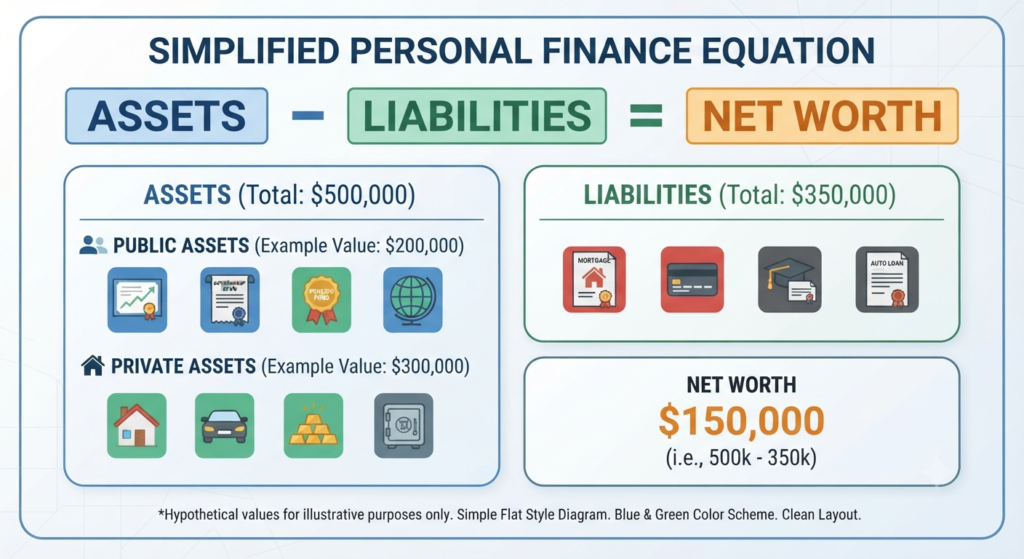
At its core, net worth is one of the simplest formulas in finance:
Net Worth = Total Assets − Total Liabilities
That’s it. Everything a person owns, minus everything they owe. For an average household, this might mean a home, a car, retirement savings, and cash, minus a mortgage, a car loan, and credit card debt. The same logic applies to a billionaire — it just gets a lot more complicated once you’re dealing with stakes in private companies, royalty catalogs, and art collections instead of a checking account balance.
Assets vs. Liabilities: The Basic Formula
To make the formula concrete, here’s what typically falls into each bucket for a public figure:
Assets can include:
- Cash and investment portfolios
- Stakes in publicly traded companies
- Ownership in private businesses
- Real estate holdings
- Royalties, licensing deals, and intellectual property
- Luxury items — art, jewelry, vehicles, aircraft, yachts
Liabilities can include:
- Mortgages on real estate
- Business loans or lines of credit
- Shares pledged as collateral against loans
- Other outstanding debt
The tricky part isn’t the formula — it’s getting reliable numbers to plug into it, especially for anything that isn’t publicly traded.
Why Celebrity Net Worth Figures Are Always Estimates
Here’s the single most important thing to understand about any net worth figure you read online: it is almost never confirmed directly by the person it belongs to, and even when it is, that self-reported figure can’t always be independently verified. Researchers are reconstructing a financial picture from the outside, which means the number you see is a snapshot built on available evidence, not an audited fact.
Public Records vs. Private Information
Some parts of a person’s wealth are relatively easy to verify because they’re a matter of public record — shares in a publicly traded company, for instance, are disclosed in regulatory filings and priced in real time by the stock market. Other parts are much harder to pin down. A privately held business, an undisclosed real estate portfolio, or a personal art collection typically has no public price tag at all, which forces researchers to estimate rather than confirm.
This is precisely why you’ll often see net worth figures described with words like “estimated” — a well-run site is being accurate, not vague, when it uses that language.
How Do Forbes and Bloomberg Calculate Net Worth?
The two most cited authorities in this space — Forbes and the Bloomberg Billionaires Index — both publish methodology notes, and while the finer details differ, the overall approach is similar enough to serve as the industry standard.
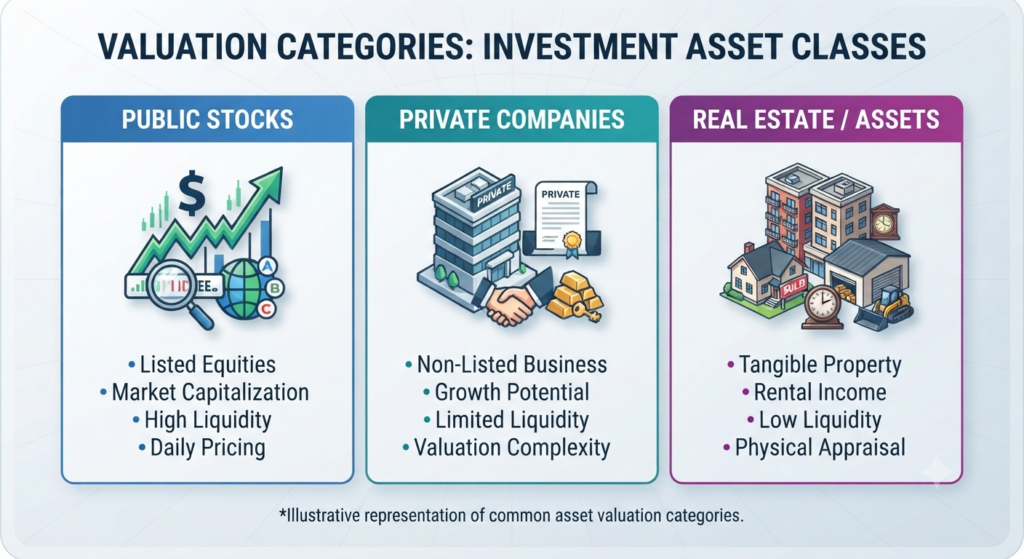
Valuing Public Company Stakes
This is the easiest part of the equation. When a person’s wealth is tied to shares in a publicly traded company, researchers multiply the number of shares held (found in regulatory filings) by the current share price. Because stock prices update constantly, this portion of a net worth estimate can, in theory, be recalculated at any moment — which is why the Bloomberg Billionaires Index updates its figures daily after markets close.
Valuing Private Companies and Closely Held Assets
Private companies don’t have a public stock price, so researchers lean on comparable valuation methods instead — essentially, “what would this business be worth if it were priced like similar public companies in the same industry?” This usually involves financial multiples such as price-to-earnings or enterprise-value-to-EBITDA ratios, benchmarked against comparable businesses that do trade publicly. Because there’s no exact market price to check against, this is also where estimates are most likely to be off.
Real Estate, Art, and Luxury Assets
Property, art, jewelry, and other tangible assets are typically valued using recent comparable sales, appraisals, or public property records where available. These figures tend to be added conservatively, since researchers generally only count assets they can reasonably substantiate — if ownership of a closely held asset can’t be verified, it’s often left out of the total entirely rather than guessed at.
Where Does Net Worth Data Actually Come From?
A credible net worth estimate isn’t pulled from thin air. It’s typically built from a combination of the following sources.
Public Filings and Court Records
Securities filings, property records, and — perhaps surprisingly — divorce or probate filings are some of the most reliable sources researchers use, since these documents can require sworn financial disclosures.
Industry Sources and Interviews
Larger outlets often speak directly with the subject, their business managers, or industry peers to sanity-check figures. Some individuals are cooperative and provide documentation; others decline to participate at all, which forces researchers to rely more heavily on outside estimates.
Comparable Market Data
When direct information isn’t available, researchers benchmark against known deals in the same industry — comparable business sales, similar contract values, or industry-standard royalty rates for things like music catalogs or endorsement deals.
Why Net Worth Estimates Differ Between Sites
If you’ve ever noticed that one site lists a celebrity’s net worth as $400 million while another says $600 million, this is exactly why. Different outlets:
- Use different valuation dates (a stock-heavy fortune can shift significantly week to week)
- Apply different discount assumptions for hard-to-sell private assets
- Have different levels of access to the individual or their representatives
- Count (or exclude) different categories, like charitable donations or family-held assets
None of this means one source is “lying” and another is “truthful” — it usually just reflects different assumptions applied to genuinely incomplete information.
| Source | Update Frequency | Best For | Key Limitation |
|---|---|---|---|
| Forbes | Periodic (annual lists, ongoing updates) | Billionaires, public company founders | Private asset estimates can lag reality |
| Bloomberg Billionaires Index | Daily (after market close) | Real-time tracking of public stock wealth | Focuses primarily on the ultra-wealthy |
| Independent net worth sites | Varies by site | Broader celebrity coverage (actors, musicians, creators) | Methodology transparency varies widely |
Common Misconceptions About Net Worth
“Net Worth” Isn’t Cash in the Bank
This is the biggest misunderstanding people have. A celebrity with a $200 million net worth almost certainly does not have $200 million sitting in a checking account. Most of that figure is likely tied up in illiquid assets — company equity, real estate, or a catalog of royalties — that can’t simply be withdrawn like cash.
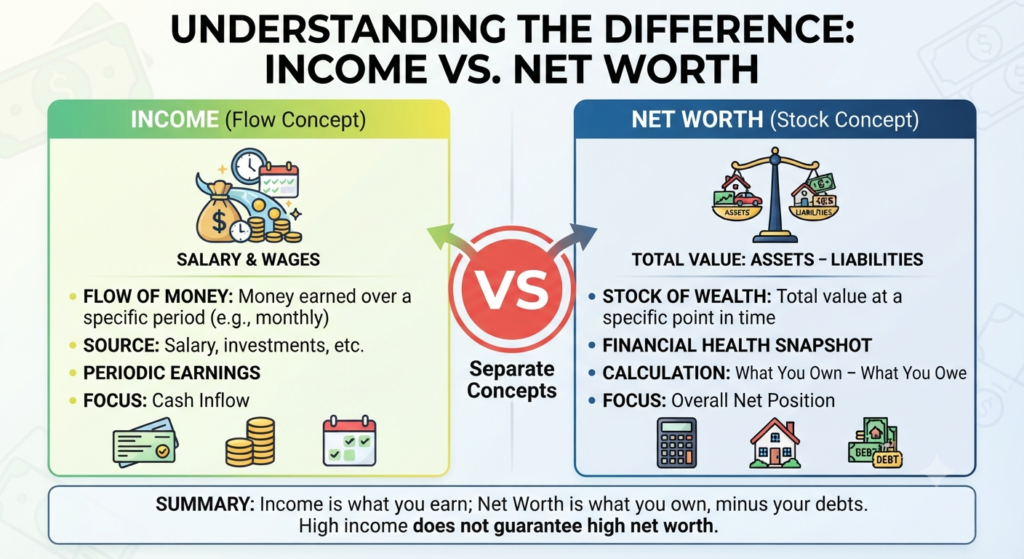
A High Salary Doesn’t Equal High Net Worth
Someone can earn an enormous annual salary and still have a relatively modest net worth if their spending, taxes, and liabilities are also high. Conversely, someone with a modest public salary can have a large net worth if they hold significant equity in a company that has grown in value. Income and net worth are related, but they are not the same thing.
How We Calculate and Verify Net Worth on NexaCreators
Every profile published on this site follows the same basic process:
- We start with the most recent estimates from established, methodology-transparent sources.
- We cross-reference multiple sources rather than relying on a single figure.
- We factor in recent, publicly reported career events — new deals, major sales, business launches — that could meaningfully move the number.
- We label every figure as an estimate, because that’s what it is.
- We revisit and update profiles periodically rather than publishing a number once and leaving it untouched.
This won’t produce a number that’s more “correct” than what Forbes or Bloomberg publish — nobody outside a person’s own accounting team can claim that — but it does mean our estimates are built the same way the industry’s most credible sources build theirs.
Related Guides
Now that you understand how these figures are actually built, put it into practice with our other guides:
- Celebrity Net Worth 2026: How Rich Are the World’s Biggest Stars? — our full pillar guide and rankings hub
- Richest People in the World 2026: Top 20 Billionaires Ranked
- Top 15 Richest Actors in Hollywood 2026
- Top 15 Richest Musicians in the World 2026
FAQs
Is celebrity net worth information accurate? It’s best understood as a well-researched estimate rather than a confirmed fact. Reputable sources base their figures on public records, comparable valuations, and available disclosures, but private wealth can never be verified with total certainty from the outside.
Why do net worth numbers change so often? Because a large share of most fortunes is tied to things that fluctuate — stock prices, business valuations, real estate markets, and new deals or contracts. As those underlying values shift, so does the estimate.
Do celebrities confirm their own net worth? Sometimes, but not usually with full documentation. Some individuals or their teams cooperate with researchers and provide details; many others decline to comment, leaving outlets to rely on independent estimates.
What’s the difference between net worth and annual income? Income is what someone earns in a given period, like a year. Net worth is a snapshot of everything they own minus everything they owe, at a single point in time. A person can have a high income and a low net worth, or the reverse.
Why do different websites list different net worth figures for the same person? Because they’re working from different data, different valuation dates, and different assumptions about hard-to-verify private assets. Small methodology differences can add up to large gaps in the final number.
Conclusion
Net worth is a simple formula wrapped around a genuinely difficult research problem. The next time you see a headline claiming someone is “worth” a specific, precise-sounding number, you’ll know what’s really behind it: public filings, comparable valuations, industry sourcing, and a healthy dose of professional estimation — not a bank statement. That context is exactly what we bring to every profile on NexaCreators, starting with our full rankings hub below.
Written by the NexaCreators Editorial Team. We research and cross-reference public financial data, filings, and industry reporting to bring you clear, up-to-date estimates on the world’s wealthiest public figures.