
Introduction
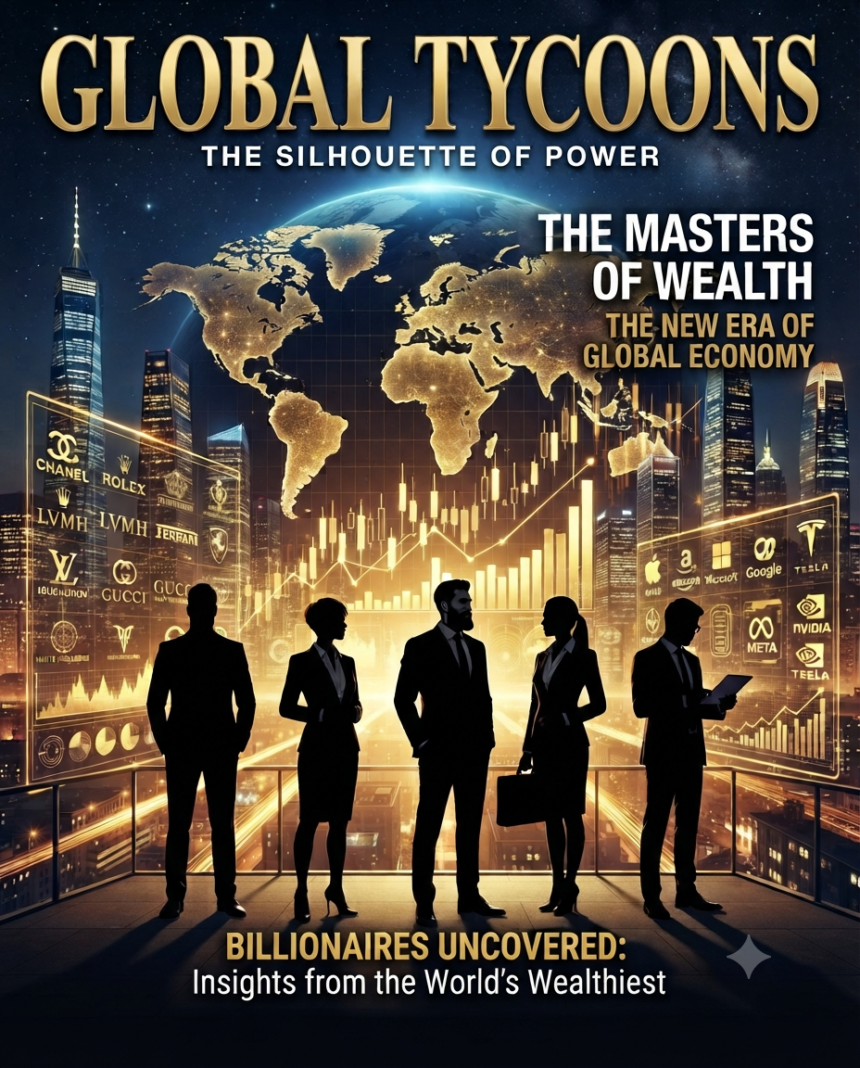
The global wealth landscape continues to evolve dramatically as we move through 2026, with fortunes being made and lost at unprecedented speeds. The richest people in the world 2026 represent a fascinating mix of tech innovators, luxury goods magnates, retail giants, and entertainment moguls who have transformed industries and accumulated staggering wealth in the process.
Understanding who holds the most wealth—and how they accumulated it—offers valuable insights into global economic trends, successful business strategies, and the industries shaping our future. From electric vehicles and space exploration to luxury fashion and e-commerce, these billionaires have built empires that influence billions of lives daily.
In this comprehensive guide, we’ll reveal the top 20 richest people in the world in 2026, examine their primary sources of wealth, and explore how they climbed to the pinnacle of global prosperity. Whether you’re curious about celebrity net worth in general or want to understand how net worth is actually calculated, this ranking provides a complete picture of extreme wealth in the modern era.
Understanding Billionaire Rankings in 2026
How We Measure the World’s Richest People
Before diving into the rankings, it’s essential to understand how billionaire net worth is determined. Unlike regular salary earners, ultra-wealthy individuals hold most of their wealth in assets rather than cash—primarily company stocks, real estate, art collections, and other investments.
The net worth figures for the richest people in the world 2026 are based on:
- Public company stock holdings (real-time market valuations)
- Private business valuations (estimated through comparable sales and industry metrics)
- Real estate portfolios (commercial and residential properties)
- Investment holdings (venture capital, hedge funds, private equity)
- Liquid assets (cash, bonds, precious metals)
- Luxury assets (yachts, private jets, art collections)
These valuations fluctuate daily based on stock market movements, currency exchange rates, and business performance. For a detailed breakdown of the methodology, check out our guide on how is net worth calculated.
Why Billionaire Rankings Change So Frequently
The competition for the title of world’s richest person has become increasingly dynamic. Stock market volatility, particularly in the tech sector, can shift net worth by billions in a single day. Additionally, strategic decisions like stock sales, philanthropic donations, and divorce settlements can dramatically impact rankings.
In 2026, we’re seeing unprecedented volatility due to:
- Global economic recovery patterns post-pandemic
- Revolutionary AI and technology breakthroughs
- Shifting consumer behavior toward digital commerce
- Electric vehicle market expansion
- Luxury goods market resilience in emerging economies
The Top 20 Richest People in the World 2026
#1-5: The Exclusive $150 Billion+ Club
#1: Elon Musk – $285 Billion
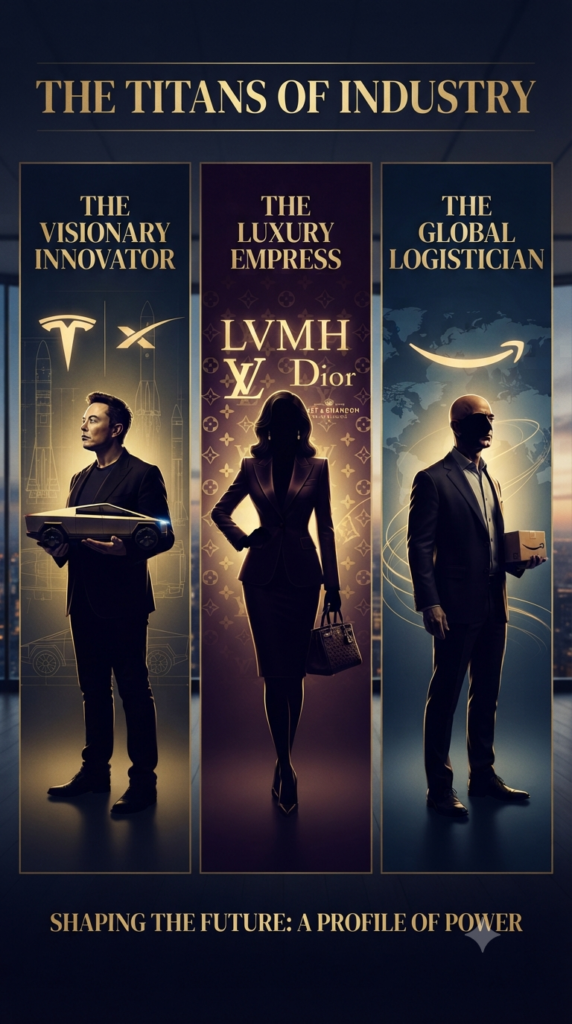
The Tesla and SpaceX CEO continues to hold the crown as the richest person in the world in 2026. Musk’s wealth is primarily tied to his stakes in Tesla (approximately 13%), SpaceX (42%), and his ownership of X (formerly Twitter). Tesla’s continued dominance in the electric vehicle market, combined with SpaceX’s groundbreaking achievements in satellite internet and space exploration, have kept Musk at the top.
His net worth experiences significant daily fluctuations based on Tesla’s stock performance, but strategic expansion into AI robotics and energy storage has diversified his wealth sources. Read our detailed analysis of Elon Musk’s net worth in 2026 to understand how he maintains this position.
#2: Bernard Arnault – $220 Billion
The chairman and CEO of LVMH (Moët Hennessy Louis Vuitton) represents old-world luxury meeting modern wealth. Arnault oversees a portfolio of over 75 prestigious brands including Louis Vuitton, Dior, Fendi, and Tiffany & Co. The resilience of the luxury goods market, particularly strong demand from Asian consumers, has kept his fortune growing steadily.
Unlike tech billionaires whose wealth can swing wildly with market sentiment, Arnault’s luxury empire provides more stable, consistent wealth growth. Discover more about Bernard Arnault’s net worth and luxury empire.
#3: Jeff Bezos – $195 Billion
Amazon’s founder and executive chairman remains firmly in the top three despite stepping down as CEO in 2021. Bezos owns approximately 10% of Amazon, which continues to dominate e-commerce, cloud computing through AWS, and digital advertising. His wealth also includes significant investments in Blue Origin (his space exploration company), The Washington Post, and various venture capital investments.
The continued expansion of Amazon’s logistics network and AWS’s dominance in cloud services ensures Bezos’s wealth continues growing. Learn more in our profile of Jeff Bezos’s net worth in 2026.
#4: Larry Ellison – $167 Billion
Oracle’s co-founder and CTO has seen his wealth surge thanks to Oracle’s successful pivot to cloud computing. As Oracle Cloud Infrastructure competes directly with AWS and Microsoft Azure, the company’s stock has performed exceptionally well. Ellison also holds significant real estate (including nearly all of the Hawaiian island of Lanai) and stakes in Tesla.
#5: Mark Zuckerberg – $155 Billion
Meta’s CEO has recovered wealth lost during the metaverse pivot struggles of 2022-2023. Meta’s successful integration of AI into Facebook, Instagram, and WhatsApp, combined with its profitable advertising business, has restored investor confidence. The company’s Quest VR platform is also gaining mainstream traction, validating Zuckerberg’s long-term vision.
#6-10: Tech Titans and Industrial Giants
#6: Bill Gates – $142 Billion
Microsoft’s co-founder continues to be among the world’s wealthiest despite donating over $50 billion to philanthropic causes through the Bill & Melinda Gates Foundation. His remaining Microsoft stake, along with investments through Cascade Investment LLC (his private investment firm), keeps him in the top ten. Gates has diversified into farmland, renewable energy, and biotechnology.
#7: Warren Buffett – $138 Billion
The “Oracle of Omaha” and Berkshire Hathaway chairman represents traditional investing wisdom. At 95 years old, Buffett continues to guide one of the world’s most successful conglomerates, with holdings in Apple, Bank of America, Coca-Cola, and dozens of other blue-chip companies. His value investing philosophy has created sustained wealth growth over seven decades.
#8: Larry Page – $129 Billion
Google’s co-founder maintains enormous wealth through his Alphabet stake (approximately 6%). Google’s continued dominance in search advertising, YouTube’s exponential growth, and successful cloud computing and AI ventures keep Page’s fortune growing even in semi-retirement.
#9: Sergey Brin – $124 Billion
Google’s other co-founder holds a similar Alphabet stake as Page. The two childhood friends have largely stepped back from daily operations but remain heavily invested in the company they founded in a Stanford dorm room. Brin also invests in experimental technologies through family offices.
#10: Steve Ballmer – $119 Billion
The former Microsoft CEO and current owner of the Los Angeles Clippers has seen his wealth grow dramatically thanks to Microsoft’s resurgence under Satya Nadella. Ballmer’s approximately 4% stake in Microsoft, acquired during his 34-year tenure, has appreciated enormously as the company successfully pivoted to cloud computing and AI.
#11-15: Fashion, Retail, and Investment Moguls
#11: Francoise Bettencourt Meyers – $102 Billion
As the heiress to the L’Oréal fortune and the world’s richest woman, Bettencourt Meyers owns approximately 33% of L’Oréal, the world’s largest cosmetics company. She also chairs the family holding company and her family’s philanthropic foundation. The beauty industry’s resilience and L’Oréal’s successful expansion into prestige and dermatological beauty have boosted her wealth.
#12: Mukesh Ambani – $98 Billion
India’s richest person chairs Reliance Industries, a massive conglomerate with interests in petrochemicals, oil and gas, telecommunications, and retail. Jio, Reliance’s telecommunications arm, revolutionized Indian mobile internet access and now serves over 450 million subscribers. Ambani’s retail ventures are also transforming India’s consumer market.
#13: Amancio Ortega – $94 Billion
The founder of Inditex, parent company of Zara and other fashion brands, has built wealth through fast fashion innovation. Despite being in his late 80s, Ortega continues to benefit from Inditex’s global expansion and successful e-commerce integration. His real estate portfolio is also substantial.
#14: Gautam Adani – $89 Billion
India’s infrastructure and energy magnate has recovered from the Hindenburg Research controversy of 2023. The Adani Group spans ports, airports, power generation, renewable energy, and data centers. India’s continued economic growth and infrastructure development drive Adani’s wealth expansion.
#15: Jim Walton – $85 Billion
The youngest son of Walmart founder Sam Walton maintains his fortune through inherited Walmart stock and serves on the company’s board. Walmart’s successful competition with Amazon in e-commerce and its dominant position in retail grocery ensure the Walton family fortune continues growing.
#16-20: Diversified Billionaires
#16: Rob Walton – $83 Billion
Jim’s older brother and former Walmart chairman also derives wealth from the family’s Walmart stake. An avid car collector and philanthropist, Rob Walton recently made headlines as part of the ownership group that purchased the Denver Broncos NFL team.
#17: Alice Walton – $82 Billion
The only daughter of Sam Walton and the richest woman in America, Alice focuses primarily on art and philanthropy. She founded the Crystal Bridges Museum of American Art in Arkansas. Like her brothers, her wealth comes primarily from Walmart stock.
#18: Michael Bloomberg – $78 Billion
The founder of Bloomberg LP (financial information and media) and former New York City mayor has built a fortune through his eponymous financial data terminal that dominates Wall Street. Bloomberg LP also operates a major media division covering business news globally.
#19: Carlos Slim Helú – $75 Billion
Mexico’s richest person controls América Móvil, Latin America’s largest mobile network operator, along with extensive holdings in banking, construction, and retail. Slim’s diversified conglomerate approach has created sustained wealth despite economic volatility in Latin America.
#20: Jensen Huang – $72 Billion
The Nvidia CEO represents the newest addition to the billionaire elite, with wealth surging due to the AI revolution. Nvidia’s graphics processing units (GPUs) have become essential for artificial intelligence and machine learning applications, causing the company’s stock to skyrocket and making Huang one of the world’s richest tech executives.
Industry Breakdown: Where Billionaire Wealth Comes From
Technology Dominates the Top Rankings
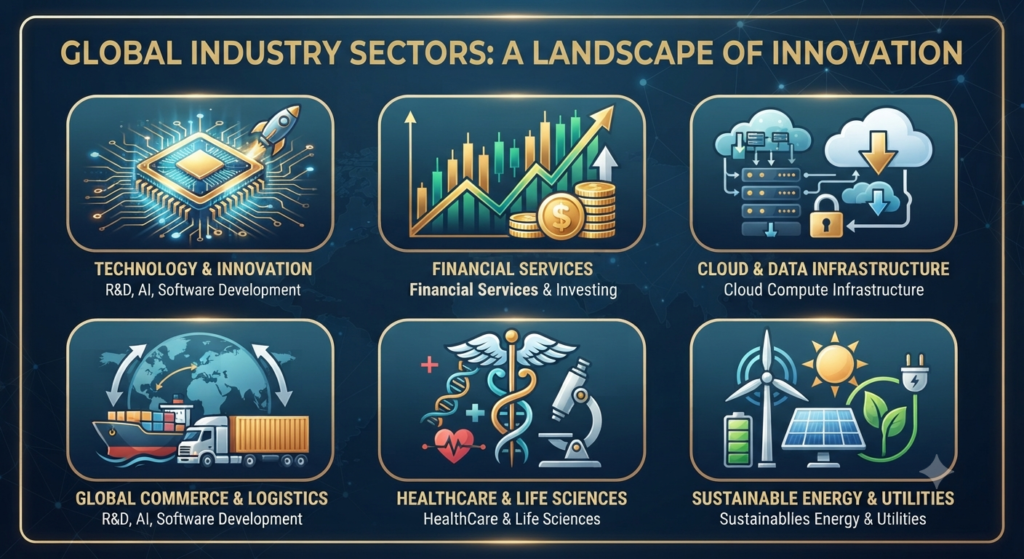
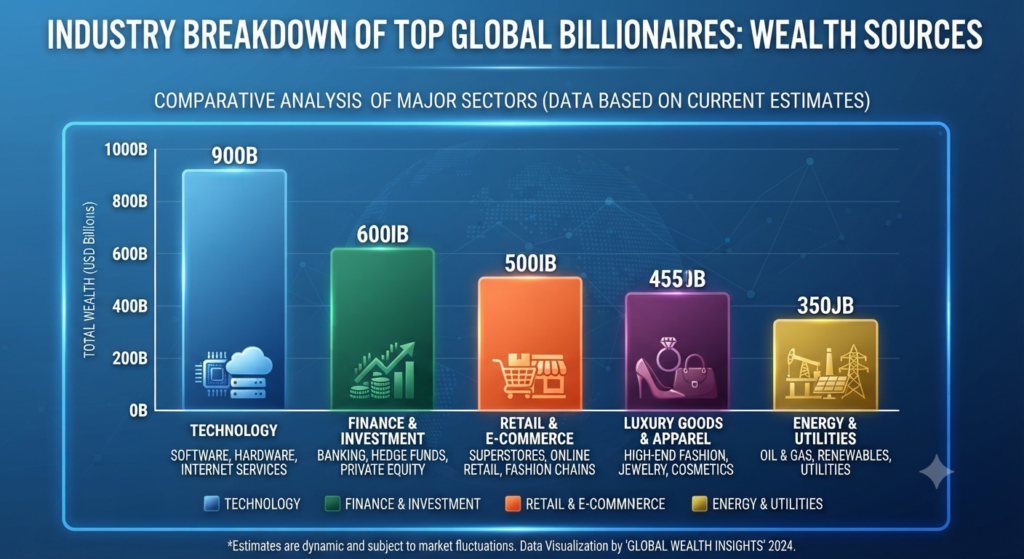
Of the top 20 richest people in the world in 2026, 11 made their fortunes primarily through technology companies—representing 55% of the ultra-wealthy elite. This technology concentration includes:
- E-commerce and cloud computing (Bezos, Amazon)
- Software and operating systems (Gates, Ballmer – Microsoft)
- Search and digital advertising (Page, Brin, Zuckerberg)
- Electric vehicles and space (Musk)
- Semiconductors and AI (Huang)
- Enterprise software and cloud (Ellison)
This dominance reflects how technology has fundamentally transformed the global economy over the past three decades. The richest tech billionaires in 2026 showcase how software, internet platforms, and hardware innovation create unprecedented wealth.
Luxury Goods and Retail Resilience
Despite technology’s dominance, traditional industries still produce extraordinary wealth:
- Luxury fashion and cosmetics (Arnault, Bettencourt Meyers, Ortega) prove that aspirational consumer brands create enduring value
- Retail giants (the Walton family) demonstrate that serving everyday consumer needs at scale generates multigenerational wealth
- Diversified conglomerates (Ambani, Adani, Slim) show that strategic expansion across related industries builds resilient fortunes
The Decline of Oil and Manufacturing Wealth
Notably absent from the very top rankings are traditional oil and gas billionaires who dominated lists in previous decades. While energy moguls remain wealthy, the shift toward renewable energy and electric vehicles has transferred wealth creation to new sectors.
Similarly, manufacturing fortunes (outside of luxury goods) have declined relatively, as globalization and automation have compressed margins and shifted value to intellectual property and software.
Geographic Distribution of Extreme Wealth
The United States Continues to Dominate
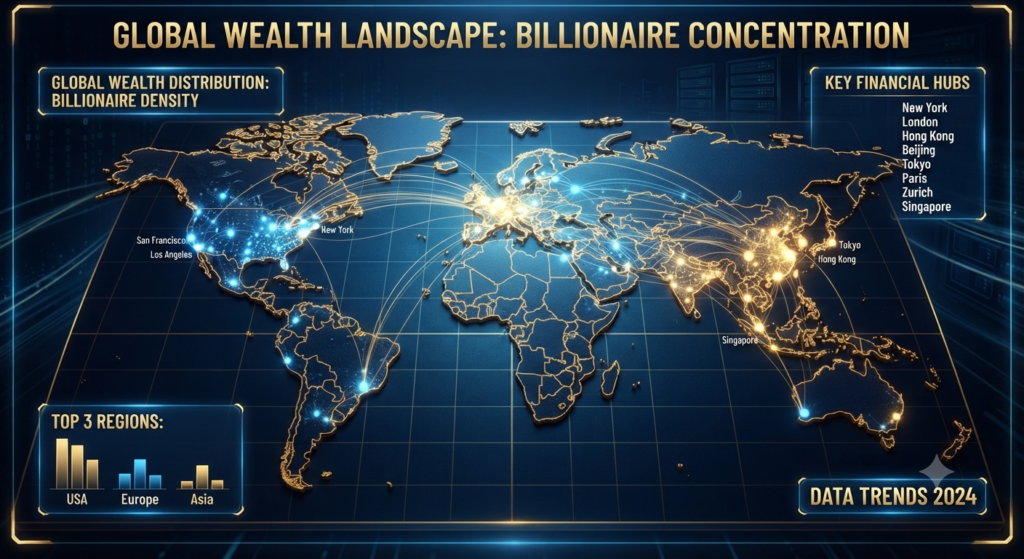
13 of the top 20 richest people in 2026 are American citizens or residents, reflecting:
- The U.S. stock market’s size and liquidity
- Silicon Valley’s innovation ecosystem
- Strong intellectual property protections
- Access to venture capital and growth financing
- Consumer market size enabling business scaling
Europe’s Luxury Goods Powerhouses
3 of the top 20 are European, primarily from France and Spain, focusing on luxury goods and fashion. European billionaires typically build wealth through heritage brands with centuries-old prestige, contrasting with America’s new-economy focus.
H3: Asia’s Rising Billionaire Class
4 of the top 20 are from Asia (India and Mexico if including Latin America), representing the fastest-growing segment. India particularly shows extraordinary wealth creation as its economy modernizes and its middle class expands.
China’s absence from the very top rankings (despite having many billionaires) reflects recent regulatory crackdowns on tech companies and wealth redistribution policies.
How the Richest People Make Their Money
Stock Ownership Is the Primary Wealth Driver
Nearly all the richest people in the world 2026 derive the majority of their wealth from owning significant percentages of valuable public companies. This equity ownership creates wealth through:
- Stock price appreciation as companies grow and become more profitable
- Dividend payments (though many growth companies reinvest rather than pay dividends)
- Voting control allowing founders to guide company strategy long-term
For example, Elon Musk’s 13% Tesla stake represents over $150 billion of his net worth, while Jeff Bezos’s 10% Amazon holding accounts for approximately $170 billion.
Strategic Diversification and Investment
Billionaires rarely keep all wealth in a single company. Common diversification strategies include:
- Real estate portfolios (commercial properties, luxury residences, farmland)
- Venture capital investing in promising startups
- Private equity acquiring and improving businesses
- Art and collectibles as both passion investments and stores of value
- Precious metals and cryptocurrencies as alternative assets
Bill Gates, for instance, has systematically diversified away from Microsoft into farmland, renewable energy, and biotechnology through his investment firm.
Wealth Preservation Through Family Offices
Ultra-high-net-worth individuals typically establish family offices—private wealth management firms exclusively serving their family’s financial needs. These offices handle:
- Investment strategy and execution
- Tax optimization across multiple jurisdictions
- Estate planning and intergenerational wealth transfer
- Philanthropic initiatives
- Lifestyle management (private aviation, luxury real estate)
Comparing Celebrity Net Worth to Billionaire Fortunes
While the richest people in the world 2026 are predominantly business magnates and tech founders, there’s growing interest in how celebrity wealth compares to these astronomical fortunes.
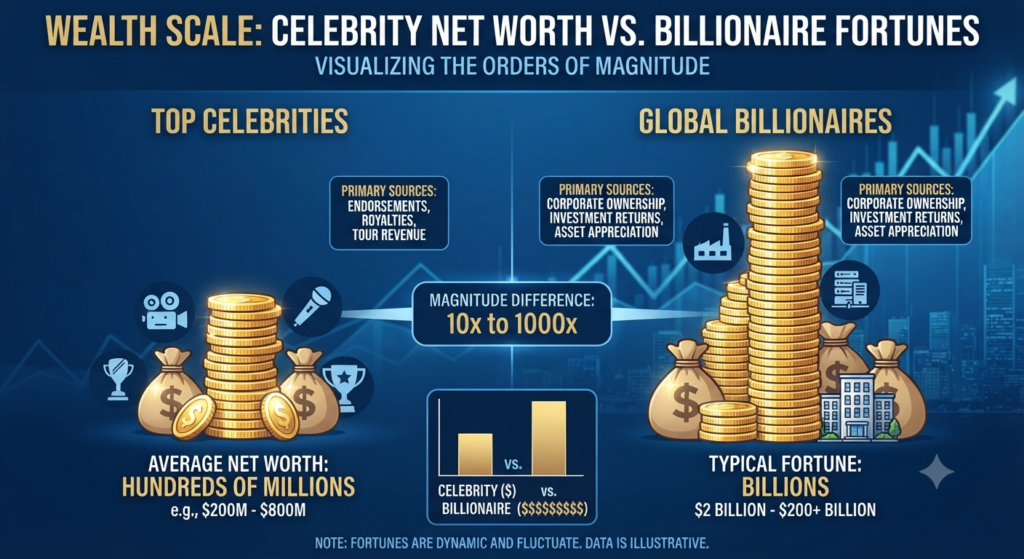
The wealthiest celebrities—including top Hollywood actors, global music superstars, and elite athletes—typically have net worth ranging from $50 million to $2 billion. Even the richest celebrity barely cracks the bottom of the billionaire rankings.
For context:
- Rihanna (~$1.4 billion from Fenty Beauty) represents the rare celebrity billionaire
- Jay-Z (~$2.5 billion from music, Armand de Brignac, and investments) shows how diversification builds wealth
- Tiger Woods and Michael Jordan (both billionaires) demonstrate that athlete earnings plus business acumen can create extraordinary wealth
However, even these ultra-successful celebrities have net worth that’s a fraction of the top 20 richest people. Bezos’s $195 billion is roughly 75 times larger than Jay-Z’s entire fortune—illustrating the massive gap between celebrity wealth and true billionaire status.
Explore comprehensive celebrity net worth rankings to see how entertainers and athletes stack up against business titans.
What the Richest People Do With Their Money
Philanthropy and Giving Pledges
Many of the world’s richest people have committed to giving away the majority of their fortunes through the Giving Pledge, an initiative started by Warren Buffett and Bill Gates:
- Warren Buffett has donated over $50 billion to various foundations
- Bill and Melinda Gates have given more than $50 billion through their foundation
- MacKenzie Scott (Bezos’s ex-wife) has donated over $14 billion since 2019
Philanthropic focuses include global health, education, climate change, poverty reduction, and scientific research.
Vanity Projects and Passion Investments
Billionaires also invest in personal passion projects:
- Space exploration (Musk’s SpaceX, Bezos’s Blue Origin, Branson’s Virgin Galactic)
- Media ownership (Bezos’s Washington Post, Bloomberg’s media empire)
- Sports franchises (Ballmer’s LA Clippers, Walton’s Broncos ownership stake)
- Superyachts and luxury real estate (palatial estates, private islands)
These investments reflect both personal interests and desire for legacy beyond pure wealth accumulation.
Political Influence and Lobbying
Extreme wealth provides political influence through:
- Campaign donations and super PAC funding
- Direct lobbying on favorable tax and regulatory policies
- Media ownership shaping public discourse
- Think tank and foundation funding advancing policy agendas
This concentration of economic and political power has sparked debates about wealth inequality and democratic governance.
The Future of Billionaire Wealth
Emerging Industries Creating Tomorrow’s Billionaires
The richest people in the world in 2036 will likely include founders in:
- Artificial Intelligence and machine learning applications
- Biotechnology and longevity medicine
- Renewable energy and battery technology
- Space resources and off-planet industry
- Quantum computing revolutionizing data processing
Today’s emerging billionaires like Jensen Huang (Nvidia) represent this transition, as AI infrastructure becomes as valuable as internet infrastructure was in the 2000s.
Wealth Inequality Debates
The concentration of wealth among so few individuals has sparked global discussions about:
- Progressive taxation and wealth taxes
- Corporate governance and stakeholder capitalism
- Universal basic income as technology displaces workers
- Antitrust enforcement breaking up dominant platforms
These policy debates will significantly impact future billionaire wealth accumulation and retention.
Generational Wealth Transfer
Over the next 20 years, an estimated $84 trillion will transfer from Baby Boomers to younger generations—the largest wealth transfer in history. How these heirs manage inherited fortunes will reshape philanthropy, investment markets, and social dynamics
Frequently Asked Questions About the Richest People
Who is the richest person in the world in 2026?
Elon Musk currently holds the title with an estimated net worth of $285 billion, primarily from his stakes in Tesla, SpaceX, and X (formerly Twitter).
How many billionaires are there in the world?
As of 2026, there are approximately 2,800 billionaires globally, with combined wealth exceeding $14 trillion.
Can billionaire net worth change significantly in one day?
Yes, billionaires whose wealth is tied to publicly traded stocks can gain or lose billions in a single day based on market movements. Elon Musk has experienced single-day swings exceeding $10 billion.
Are there any self-made billionaires in the top 20?
Yes, most of the top 20 are self-made, including Musk, Bezos, Gates, Zuckerberg, Ellison, and Page and Brin. Notable exceptions include the Walton siblings (inherited Walmart wealth) and Bettencourt Meyers (inherited L’Oréal).
How do billionaires avoid taxes legally?
Common legal tax strategies include:
- Borrowing against stock holdings rather than selling (avoiding capital gains taxes)
- Charitable donations reducing taxable income
- Holding assets until death for step-up basis
- Locating in favorable tax jurisdictions
Conclusion: Understanding Extreme Wealth in 2026
The richest people in the world 2026 represent an exclusive club whose combined wealth exceeds the GDP of most nations. These billionaires have built fortunes by creating valuable companies, transforming industries, and scaling businesses to serve billions of customers globally.
While technology dominates the current rankings, luxury goods, retail, and emerging sectors like AI continue producing extraordinary wealth. The common thread among all these billionaires is equity ownership in valuable enterprises—showing that building and owning businesses, rather than earning salaries, creates the path to extreme wealth.
Whether you’re fascinated by how tech billionaires built their empires, curious about celebrity net worth comparisons, or want to understand the mechanics of how net worth is calculated, studying the world’s richest people provides valuable insights into wealth creation, business strategy, and global economic trends.
As we move further into 2026, expect continued volatility in these rankings as markets fluctuate, new technologies emerge, and the next generation of wealth creators rises to challenge the established elite